
Virginia’s highest court is at a crossroads. The Virginia Supreme Court is currently considering whether to block a voter-approved congressional map widely seen as favorable to Democrats—a move that could redefine the state’s political landscape ahead of the next federal elections. This isn’t just a legal debate; it’s a test of democratic accountability, judicial authority, and the long-standing tension between popular will and constitutional interpretation.
The map in question emerged from a citizen-led redistricting commission, created after voters approved a constitutional amendment in 2020 aimed at ending partisan gerrymandering. But despite its grassroots origins, the final map has drawn criticism from Republicans and some legal experts who argue it violates the state constitution’s equal population requirements and undermines the very principles of fairness it was meant to uphold.
Now, the court must answer a critical question: Can a map approved by voters still be struck down if it appears to favor one party? The decision could set a precedent not just for Virginia, but for other states wrestling with similar redistricting reforms.
The Origins of the Contested Map
The current redistricting cycle began with high hopes. In 2020, 66% of Virginia voters backed Ballot Question 1, amending the state constitution to establish a 16-member redistricting commission composed of legislators and citizens. The goal was clear: remove partisan control from the redistricting process and produce maps that reflect the will of the people—not political insiders.
But when the commission failed to agree on final maps, the task defaulted to the Virginia Supreme Court, which in 2021 appointed a special master—retired judge John O. Hofmeister—to draw both congressional and state legislative districts.
Hofmeister’s maps were implemented for the 2023 elections. Now, after another round of public input and revised proposals, a new congressional map was approved by voters through their elected representatives and submitted for judicial review. This version, however, skews noticeably toward Democratic advantage, with seven of the state’s 11 U.S. House districts rated as leaning or solid Democratic by election analysts.
Republicans argue this outcome contradicts the commission’s mandate of neutrality. They claim the map packs Republican voters into a few districts while spreading Democratic voters more efficiently across others—a classic sign of gerrymandering, even if done under the guise of reform.
Legal Grounds for the Challenge
The legal challenge rests on two pillars of the Virginia Constitution: the Equal Protection Clause and the requirement that districts be “compact and contiguous” with populations as nearly equal as practicable.
Petitioners argue that several districts in the proposed map exceed the ideal population size by more than 5%, violating the one-person, one-vote principle. For example, the 5th District is reported to be overpopulated by nearly 7%, while the 8th is under by a similar margin. Such disparities, they say, dilute the voting power of residents in overpopulated areas.
Additionally, critics point to the map’s geographic shape. The 3rd District, which covers much of Hampton Roads, is described as “a fragmented arc of disconnected neighborhoods” that stretches across multiple jurisdictions without logical community cohesion. Similar concerns apply to the 10th District, which snakes through Northern Virginia suburbs in a way that appears engineered to consolidate Democratic strongholds.
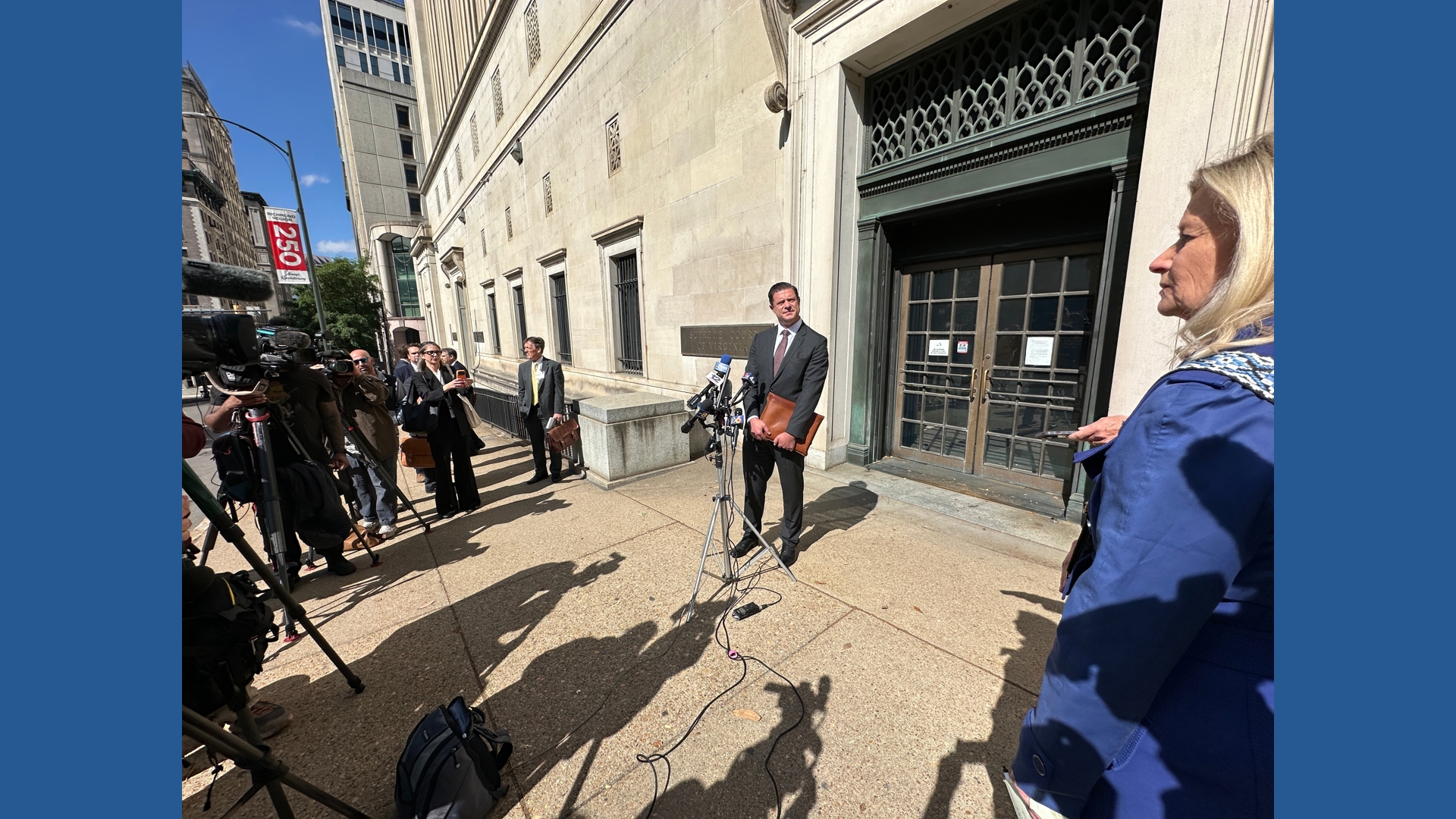
Legal precedent in Virginia is sparse on redistricting. The court’s 2021 decision to appoint a special master set a foundation, but it didn’t establish clear standards for evaluating partisan impact. This time, the justices may have to define what “fair” actually means in a redistricting context—especially when the people’s representatives have already signed off.
The Role of the Virginia Supreme Court
Historically, state supreme courts have played a limited role in redistricting, deferring to legislatures unless constitutional lines are clearly crossed. But Virginia’s recent shift to court-oversight has thrust its justices into the political spotlight.
The current court is composed of justices appointed under both Democratic and Republican governors, though recent appointments have tilted it toward a more conservative balance. This composition matters—because the decision isn’t just about numbers, but interpretation.
If the court blocks the map, it would be intervening in a process that, while initiated by a commission, was ultimately shaped by elected officials responding to voter sentiment. That could be seen as judicial overreach.
But if it allows the map to stand despite apparent population imbalances and partisan skew, it risks undermining public trust in the redistricting reform itself.
Already, justices have signaled skepticism. During oral arguments, some questioned whether the commission had truly followed its own rules. “Where is the evidence of neutrality?” one justice asked. “If we’re supposed to be eliminating gerrymandering, doesn’t this look like the same game with different players?”
Voter Approval vs. Constitutional Compliance
One of the most contentious aspects of this case is the argument that the map was “voter-approved.” In reality, while the redistricting process was enabled by a public referendum, the specific map was not directly voted on by citizens.
Instead, it was adopted by the Virginia General Assembly—whose members were elected by voters—and then submitted to the court for review. Supporters argue that this constitutes democratic legitimacy. After all, the lawmakers acted within a framework created by the people.
But legal experts caution against conflating procedural approval with constitutional validity. “Just because a legislature passes something doesn’t make it legal,” says Dr. Lena Pruitt, a constitutional law professor at UVA. “The court’s job is to enforce the constitution, not ratify political outcomes.”
The distinction is crucial. If the court defers simply because the map has legislative backing, it may set a dangerous precedent: that any map, no matter how skewed, can survive scrutiny if enough politicians support it.
Conversely, overriding a map crafted through a reformed, transparent process could discourage future reform efforts. “We’re asking citizens to get involved,” says activist Jamal Carter, who served on a public advisory panel. “But if their work gets tossed out anyway, why participate?”
Practical Implications for Virginia Voters
Beyond the courtroom, real people stand to be affected.
In Northern Virginia, voters in Loudoun and Prince William counties may find themselves split across multiple districts, weakening their collective influence. Meanwhile, rural voters in Southwest Virginia—already underrepresented—could see their districts stretched even further to accommodate urban population centers.
Campaigns will also feel the impact. A Democratic-favoring map likely means fewer competitive House races, reducing voter choice and increasing negative campaigning in the few toss-up districts that remain.

Historically, Virginia has been a swing state. But with only one or two truly competitive congressional districts under this map, general elections may become foregone conclusions. That could depress turnout, especially among Republicans in Democratic-leaning areas and vice versa.
Moreover, the uncertainty delays candidate filing and fundraising. With the court’s decision pending, potential candidates are hesitant to launch campaigns. “I’d love to run in the 7th District,” said small business owner Teresa Lin, “but if the lines might change in six months, how do I build a team or raise money?”
Precedent and National Repercussions
Virginia is not alone in this struggle. States like Michigan, Colorado, and California have also adopted independent or citizen-led redistricting commissions. But few have faced direct judicial challenges to maps produced through these new systems.
If Virginia’s Supreme Court blocks this map, it could inspire similar legal actions elsewhere—especially in states where reform efforts are seen as favoring one party.
On the flip side, if the court upholds the map despite flaws, other states may view it as a green light to push boundary-pushing designs under the banner of reform. That could trigger a new wave of gerrymandering, this time masked as citizen-driven change.
The U.S. Supreme Court has largely avoided intervening in partisan gerrymandering cases since its 2019 Rucho v. Common Cause decision, declaring such disputes “political questions” beyond federal reach. That leaves state courts as the primary enforcers of fair representation—a responsibility many are unprepared to handle.
Virginia’s decision could become a model—or a cautionary tale—for how states balance democratic input with legal rigor.
A Path Forward: Transparency and Standards
Regardless of the court’s ruling, one lesson is clear: Virginia needs clearer redistricting standards.
The current constitution prohibits partisan gerrymandering but doesn’t define it. It demands compactness but doesn’t measure it. It calls for public input but doesn’t ensure equal influence.
To prevent future crises, lawmakers should consider codifying objective metrics—such as the efficiency gap, mean-median difference, or partisan bias scores—into law. They could also establish a nonpartisan technical staff to evaluate maps before submission, reducing reliance on last-minute court intervention.
Public education is equally important. Many voters still don’t understand how redistricting works or how it affects them. Civic groups, schools, and media outlets must do more to demystify the process.
And commissions need real independence. In Virginia, legislators still hold significant sway over the redistricting body. True reform may require removing elected officials entirely from the commission—or at least limiting their voting power.
The Decision Looms—And So Does Accountability
The Virginia Supreme Court’s ruling could come at any moment. When it does, it will carry weight far beyond the courtroom.
If the court blocks the map, it affirms that no process—no matter how well-intentioned—is above the constitution. If it allows the map to stand, it signals that political outcomes, once legitimized by elected representatives, deserve deference.
But legitimacy isn’t just about procedure. It’s about trust. And trust erodes when maps look rigged, even if they pass technical muster.
Virginia had a chance to lead on redistricting reform. Now, it has a chance to get it right—not by favoring one party, but by holding all parties to the same standard.
The court’s decision should be guided not by politics, but by principle: that every vote should carry equal weight, and every district should reflect real communities—not artificial constructs designed to protect incumbents or amplify partisans.
The map may favor Democrats today. But fairness shouldn’t have a party.
FAQ
What should you look for in Virginia Supreme Court Weighs Fate of Democratic-Favoring House Map? Focus on relevance, practical value, and how well the solution matches real user intent.
Is Virginia Supreme Court Weighs Fate of Democratic-Favoring House Map suitable for beginners? That depends on the workflow, but a clear step-by-step approach usually makes it easier to start.
How do you compare options around Virginia Supreme Court Weighs Fate of Democratic-Favoring House Map? Compare features, trust signals, limitations, pricing, and ease of implementation.
What mistakes should you avoid? Avoid generic choices, weak validation, and decisions based only on marketing claims.
What is the next best step? Shortlist the most relevant options, validate them quickly, and refine from real-world results.